
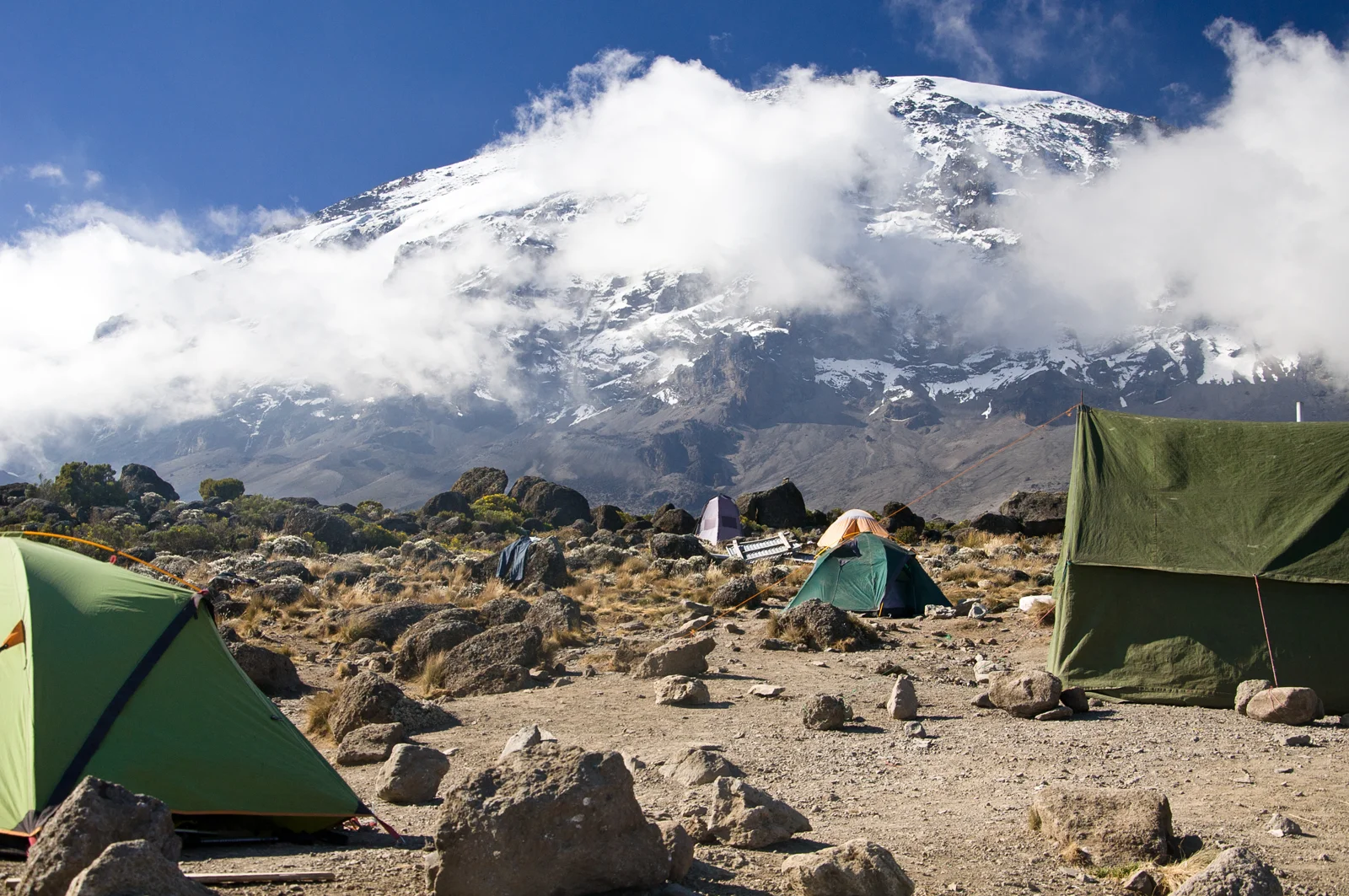
The mountain, day by day.
Your crew. Your kit. Your nights under the mountain sky. A practical look at the expedition behind the summit.
More than a route on a map.
A climb is a sequence of walking days, meals, rest and small preparations. This guide brings those pieces together. For your EOK departure, the written itinerary and inclusion list confirm the equipment, accommodation and arrangements supplied.
Our expedition photographs offer a glimpse of mountain life. Your confirmed itinerary sets out the arrangements for your departure.
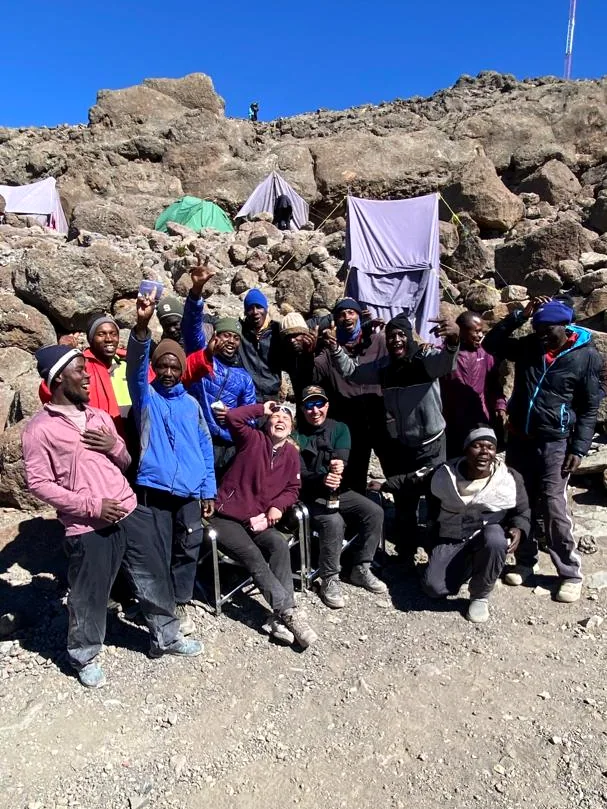
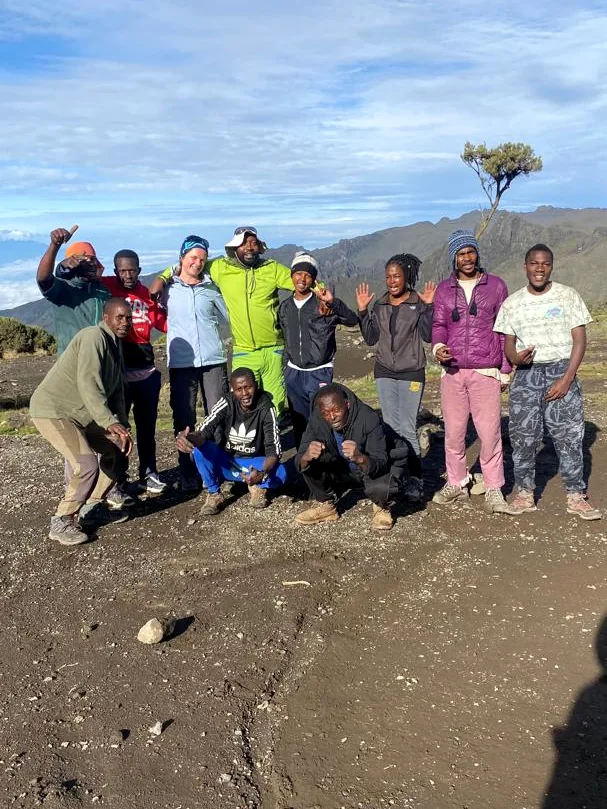
Our Mountain Crew
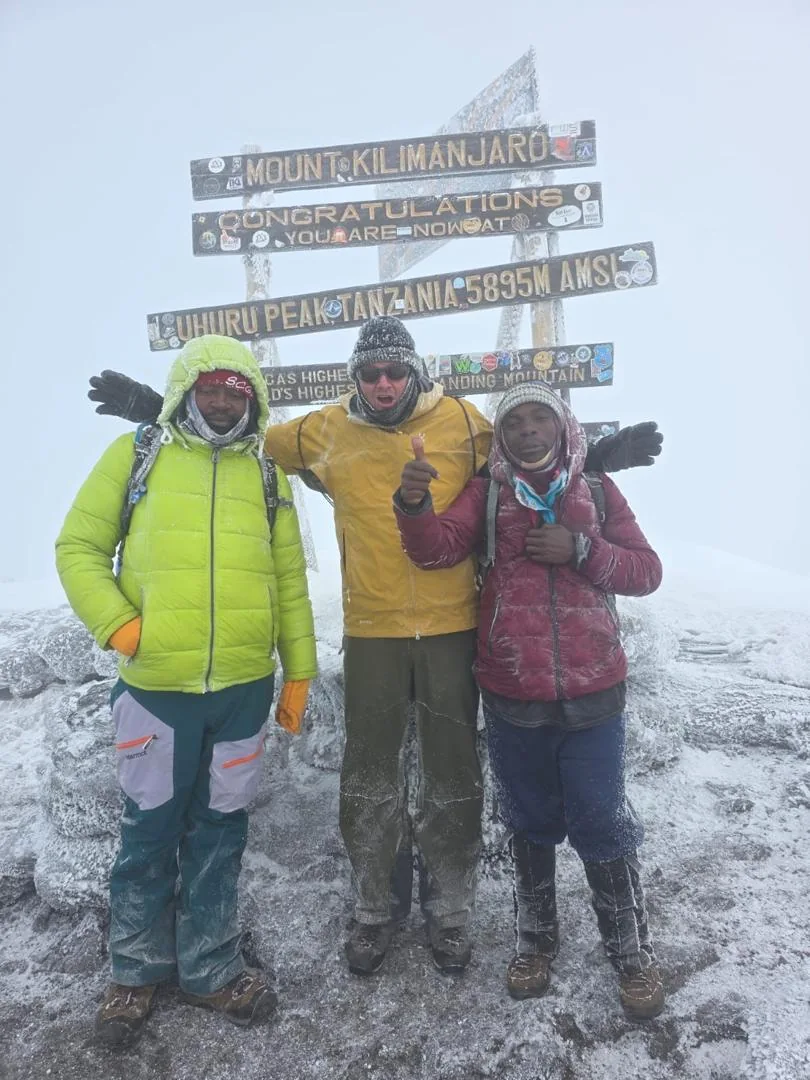
Our guides: Gastor, Dainess and Denis.
Guides & assistant guides
Your lead guide coordinates the mountain day: briefing the group, setting a sustainable pace and managing route decisions. Assistant guides support the group along the trail. Tell the guides how you feel, including symptoms you might otherwise dismiss.
Cooks & porters
The cook organises mountain meals. Porters transport expedition loads and help establish camp, allowing you to walk with your daypack. Keep the agreed duffel limit in mind: extra luggage changes the load carried by the team.
Prepared before the first step
Before travel, our Arusha team provides your written itinerary, packing list, equipment guidance, arrival instructions and pickup contact, and arranges a preparation call. Your lead guide conducts a briefing and personal equipment check the day before the hike.
Briefed and supported each day
Daily trek briefings cover the terrain and expected walking time. Guides check your health, readiness and oxygen saturation. Report any symptoms promptly so the guides can assess how you are feeling.
If a climber needs to descend early, an assistant guide accompanies them. Guiding support remains with the continuing group, with the lead guide coordinating the arrangements.
Crew welfare matters
Porter expedition loads are limited to 20 kg, with the total including personal belongings capped at 25 kg. Porters receive three meals daily and sleep in dedicated porter tents within their permitted capacity. Crew payment is made the day after returning from the mountain.
EOK’s minimum recommended tips
USD per crew member per day, contributed by the whole climbing group, not by each climber. Tips are separate from the expedition price.
| Role | Minimum recommended USD per crew member per day |
|---|---|
| Lead guide | $20 |
| Assistant guide | $15 |
| Chef | $15 |
| Porter | $10 |
| Summiting porter | $12 |
| Waiter | $12 |
Our team confirms your crew roster and explains how to distribute tips at your briefing. Where a waiter or summiting porter is part of the porter allocation, count that crew member once for the relevant day.
Equipment & Gear
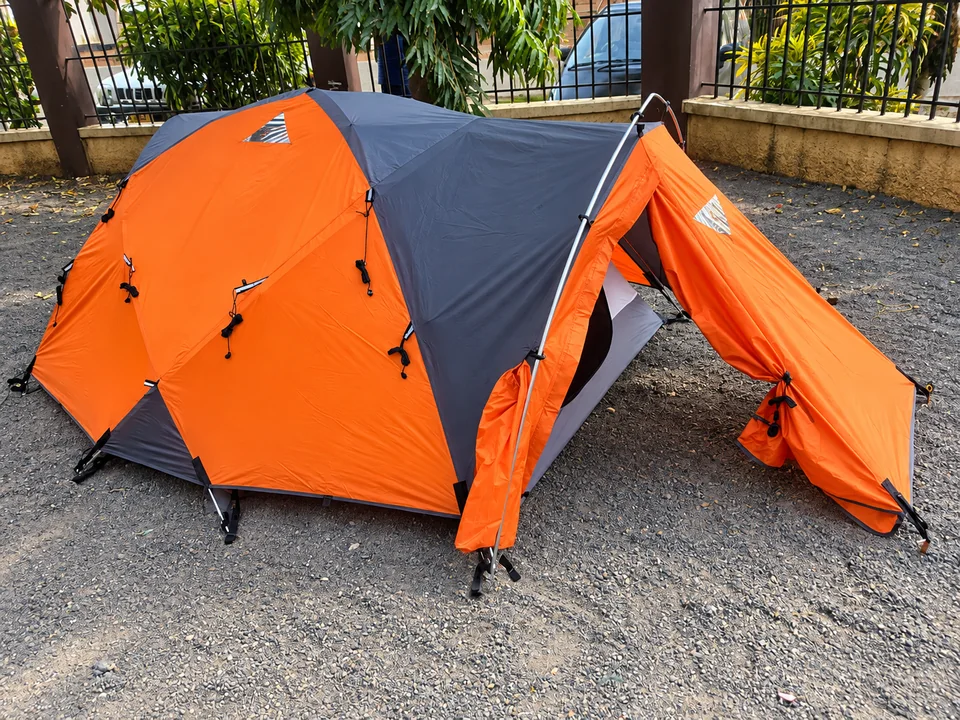
See the equipment behind your climb.
Explore our mountain tents and sleeping arrangements, understand what the standard Lemosho expedition provides, and prepare your personal kit.
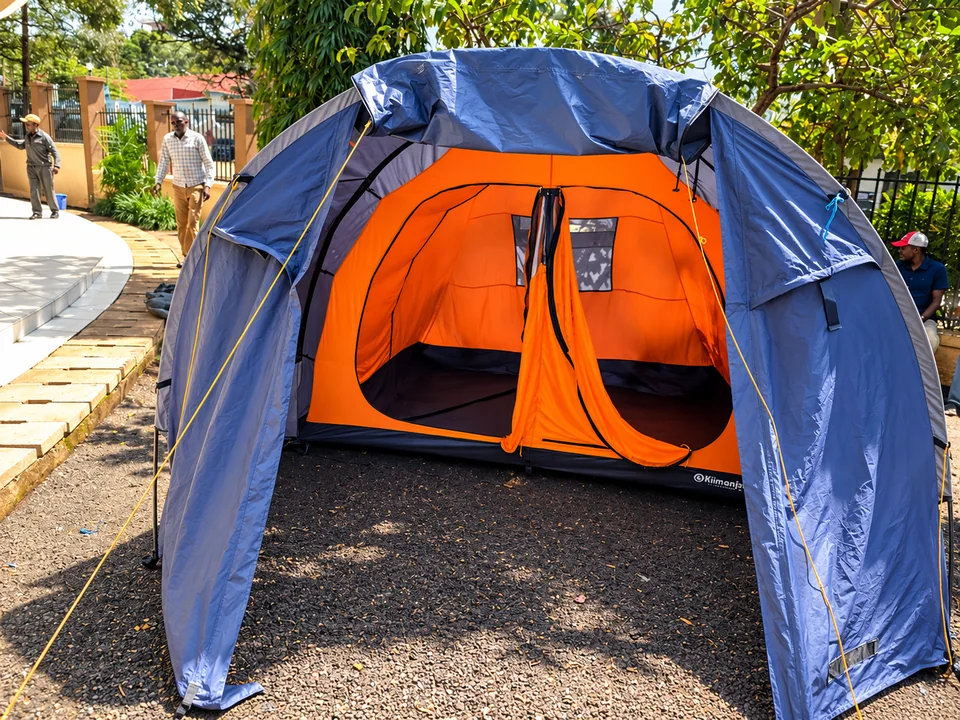
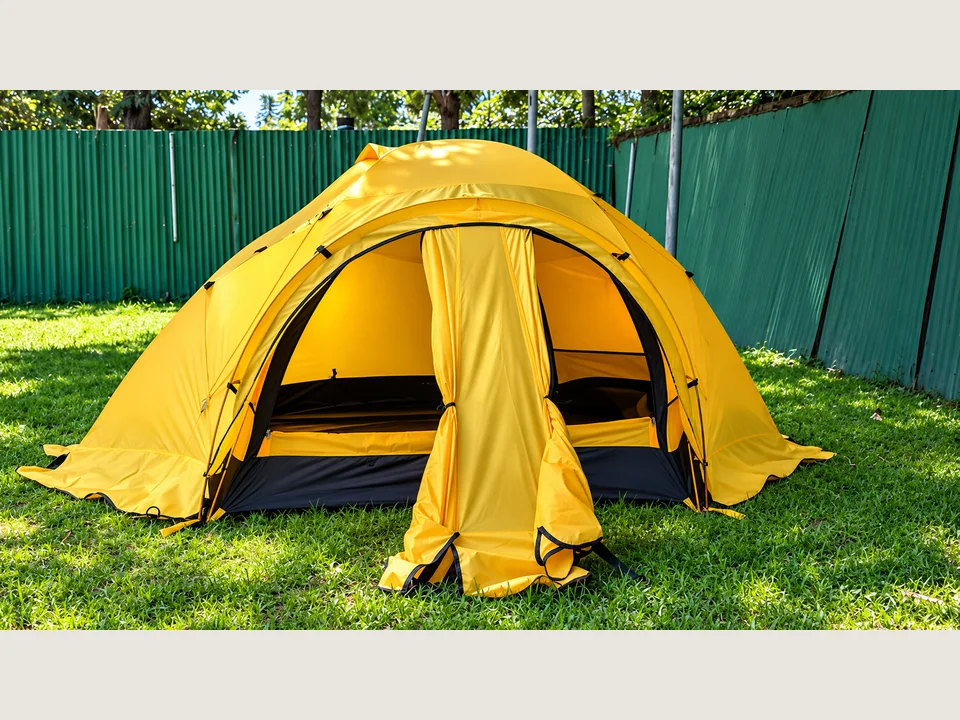
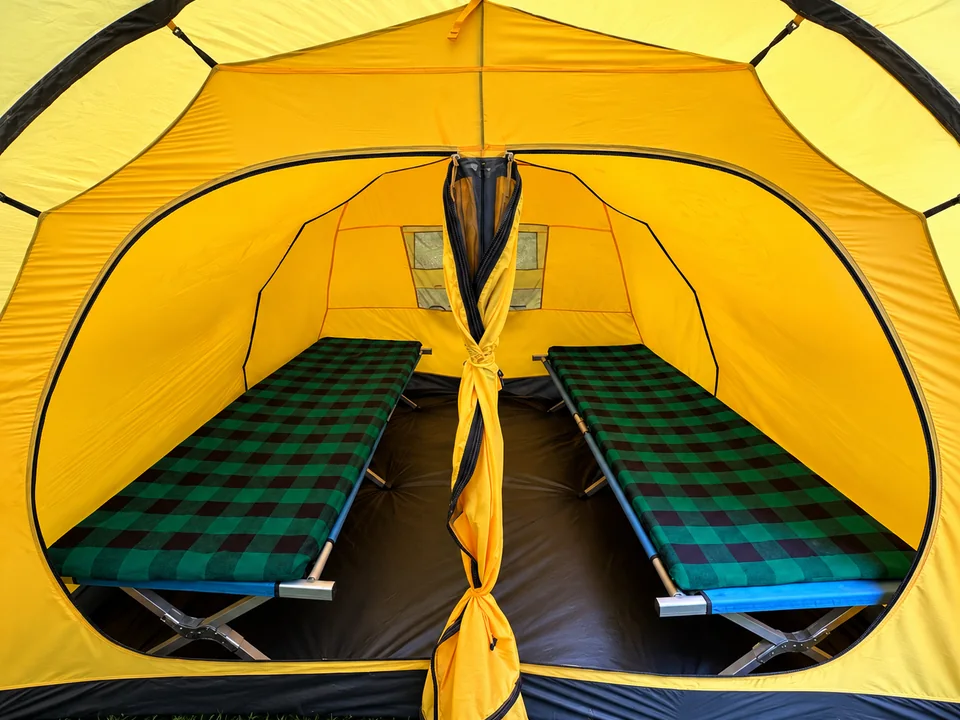
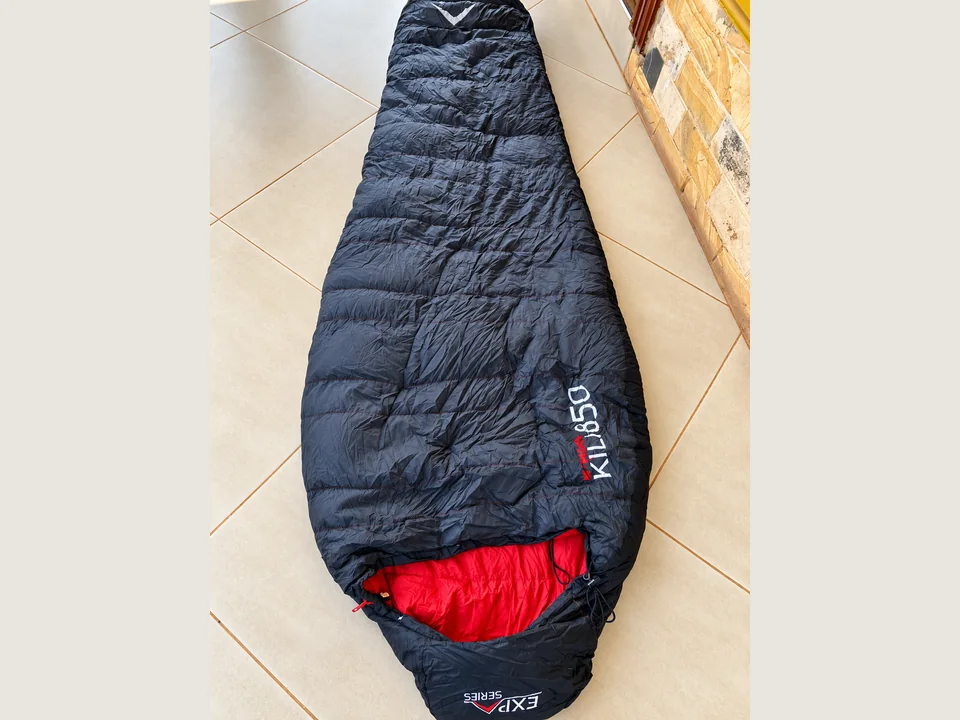
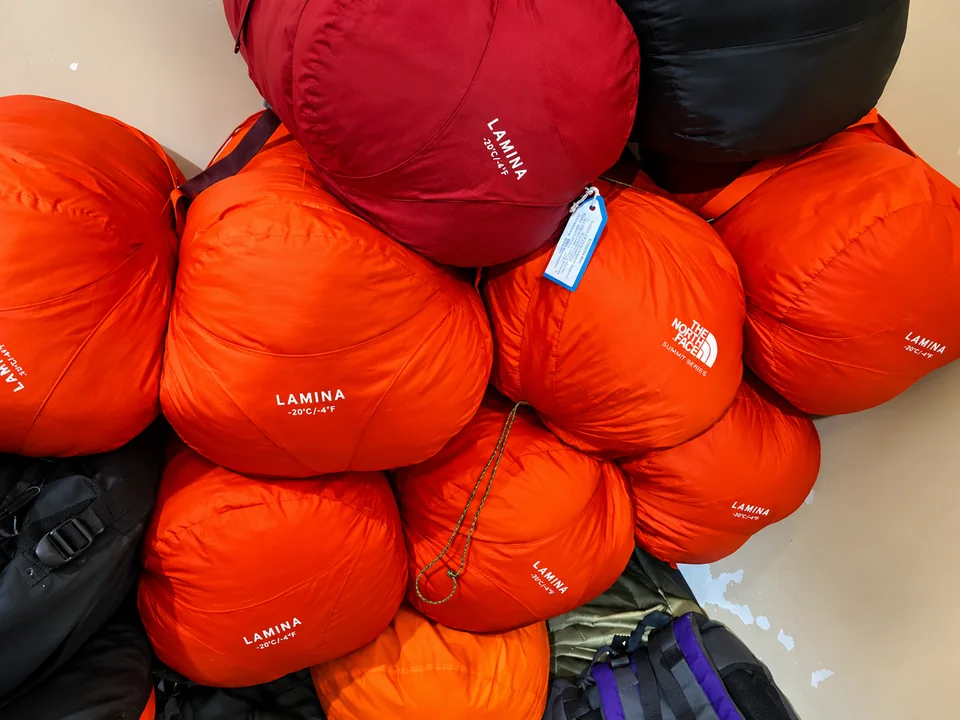
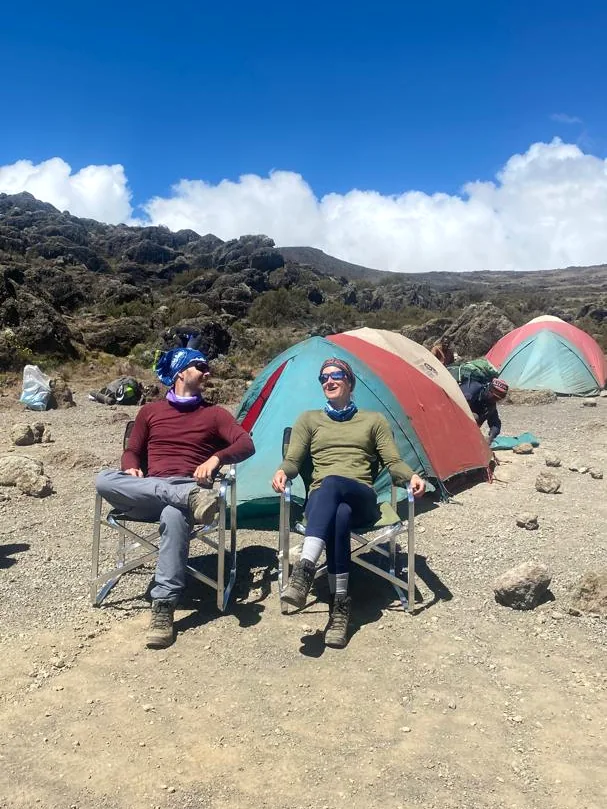
Two climbers share a mountain sleeping tent, with a standard mattress per climber on the private Lemosho package. The raised beds pictured are an alternative setup and are not included in the standard package. Sleeping bags and other selected personal equipment may be rented separately, subject to confirmed availability. Specifications are confirmed from original equipment information, not enhanced label text.
Camps & Mountain Life
Morning: pack, eat, begin steadily
Organise your duffel and daypack before departure. Breakfast, bottle refills and the guide’s briefing set up the day. Keep essentials with you; porter-carried bags may reach the next camp at a different time from the walking group.
On the trail: your pace has a purpose
Walking time changes with terrain, weather and the group. Move at the guide’s pace and use agreed pauses for layers, food and water. The landscape can shift from damp forest to open, windy ground; keep waterproofs within reach rather than buried in the duffel.
Arrival: small routines make a difference
Find your sleeping space, change into dry layers and separate damp kit from your sleeping bag. Take care around rocky ground and guy lines. Camp is basic: do not rely on hot showers, reliable charging or mobile signal.
Evening & summit night
Meals, the next day’s briefing and an early rest form the evening rhythm. Set out your headlamp and night essentials. The summit attempt usually starts in darkness and is followed by a long descent; exact timing depends on the route and the guide’s decisions.
Marangu’s shared dormitories offer a roof, rather than private hotel rooms. Camping routes use tents. A stop named “Hut” does not necessarily mean your group sleeps indoors. Your confirmed itinerary settles the arrangement.
Food & Water
Meals around the walking day
The mountain cook prepares meals around the itinerary. Clarify breakfast, lunch stops or packed lunches, dinner and summit-night food in your departure briefing. Bring a small selection of familiar snacks that remain easy to eat in cold conditions.
Dietary needs belong in the booking brief
Tell us about dietary requirements and allergies before booking. Discuss ingredients, cross-contact and any specialist foods you need to bring. The agreed catering plan determines what can be supplied; the mountain kitchen cannot improvise every request at short notice.
Refills & cold-weather access
Confirm drinking-water treatment and refill arrangements with the team. Do not drink untreated stream water. Carry the amount agreed for the stage, with a bottle system you can use while wearing gloves. Bottles and hydration tubes need attention in freezing conditions.
Tell the guide if nausea, poor appetite or difficulty drinking develops. These observations can matter when assessing altitude symptoms.
Safety & Acclimatization
Time matters; fitness is not immunity
Compare sleeping elevations and ascent schedules as well as total days. Extra time can support acclimatization, but no route or fitness level guarantees a summit. A short itinerary has fewer opportunities to adapt.
Speak up as soon as you feel unwell
Report headache, nausea, dizziness or unusual fatigue to your guide. Do not go to a higher sleeping altitude while altitude symptoms persist. Worsening symptoms require descent decisions; confusion, loss of coordination or breathlessness at rest need urgent help and descent.
Understand the monitoring & descent plan
Ask how guides check symptoms, what monitoring equipment is carried, who decides on turnaround and how a descending climber is accompanied. A single oxygen reading should not replace assessment of how you feel and function.
Confirm emergency arrangements
Before departure, confirm emergency equipment, communications, evacuation arrangements and responsibility for costs. Check insurance for your planned altitude and rescue cover. Discuss personal medical conditions and medicines with a qualified clinician.
Altitude guidance source
Reviewed 9 October 2026. General guidance follows the CDC Yellow Book: high-altitude travel. Personal medical advice and the departure’s emergency arrangements must be discussed separately.
Bring your questions. We’ll shape the brief.
Tell us your dates, route interests, group size, sleeping preference and any equipment or dietary needs. Your confirmed proposal brings the practical arrangements together.
Plan my climb →