Start with a written rental request
Ask our team about sleeping bags, trekking poles and any other equipment you need to rent. Confirm availability, sizes, specifications and prices before departure; rental items are reserved only after confirmation.
Send the item, specification, size and dates you need. Ask about condition, cleaning, deposits, loss or damage terms and the collection / return process. A general promise of “gear available” is not enough to plan a summit outfit.
Keep fit-critical items familiar
Well-fitting boots are best tested over repeated long walks before travel. Gloves, leg layers and your daypack also need practical fit checks. A jacket should work over your other layers, while a sleeping bag should be suitable for expected cold conditions.
For sleeping bags, compare the manufacturer’s temperature ratings and ask which rating the supplier is quoting. A liner adds comfort but does not fix an inadequately warm bag. Include the rental’s weight in the total duffel allowance.
Inspect before leaving for the trailhead
Leave arrival time for the briefing and gear check. Test zips, straps, pole locks, headlamp power and waterproofs. Try on hired clothing with the layers you intend to wear underneath. Agree how unsuitable or missing equipment will be replaced before the climb starts.
Local availability varies. Plan critical rentals ahead and bring the personal essentials that are difficult to replace, especially medication and footwear.
Confirm the whole sleeping system
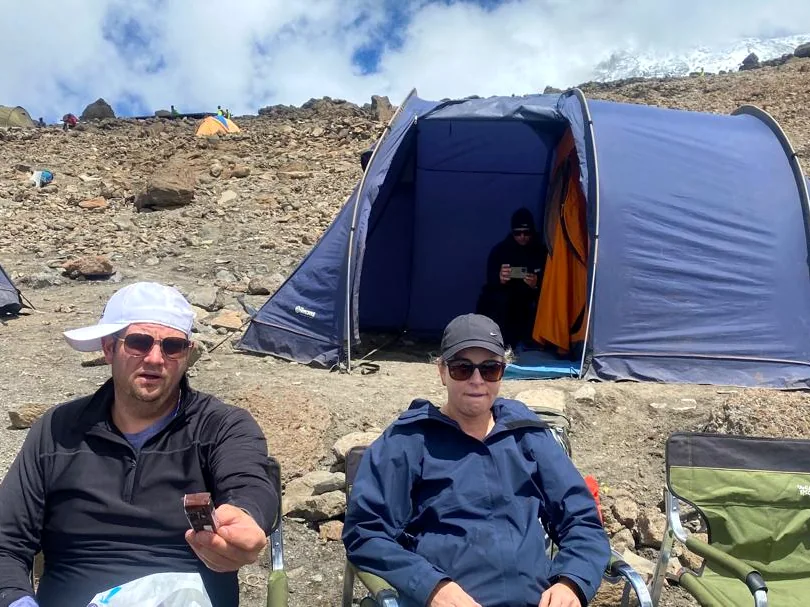
Check the tent or hut arrangement, sleeping mat and sleeping bag separately. Ask about bag warmth, size, rental condition and collection. The tents in expedition photographs are examples from actual climbs, not a guaranteed equipment model for your departure.